You are here: About — the formation behind the practice.
About
I design learning systems that change how organizations perform
My work sits between strategy and delivery: diagnosing what is actually blocking performance, designing the system that resolves it, and building the artifacts that make it real inside the business.
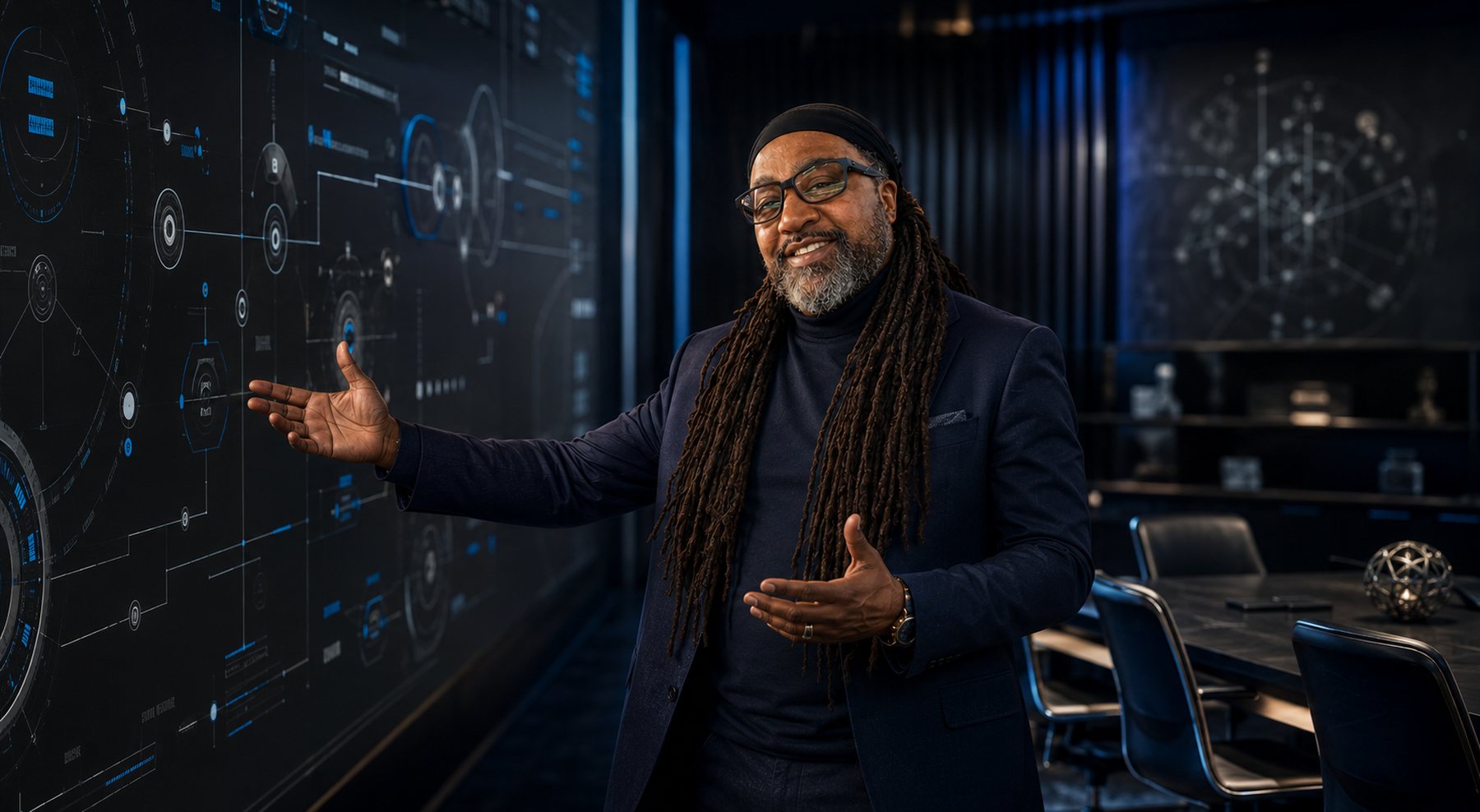
I've spent my career studying a deceptively simple question: What helps people actually become capable?
Operating philosophy
- 01
Diagnosis before design
Most requests for training are requests for relief from a symptom. The first job is to find the actual constraint — process, information access, decision rights, or capability.
- 02
Systems change behavior
Content alone rarely does. Durable performance comes from the surrounding architecture: sequencing, practice, feedback, support at the moment of work, and reinforcement.
- 03
Build for the organization that exists
Elegant solutions that assume ideal conditions fail. Design has to survive real constraints on time, budget, technology, and attention.
- 04
Structure over volume
Fewer, better-structured artifacts outperform large libraries nobody navigates. Clarity of structure is the product.
- 05
AI as capability amplification
AI earns its place when it improves judgment, access, or practice. If its only contribution is faster content, it has not changed performance.
Professional history
Present
Learning Strategy, Capability & AI Enablement
Framework development, organizational analysis, learning architecture, and AI enablement practice.
Recent
Instructional Technology & Organizational Learning
Learning systems, onboarding and performance support, governance analysis, digital learning production.
Earlier
Professional Development & Facilitation
Program design and delivery for employees, trainers, and leaders.
Foundation
Education & Instructional Technology
Classroom practice and technology integration — where the question about capability began.
Facilitation practice
Workshops
Structured working sessions built around a decision or an output.
Professional development
Sustained development for practitioners and specialists.
Employee training
Role and task-level capability delivered at scale.
Technology training
Adoption-focused sessions anchored to real workflows.
Leadership sessions
Executive and leadership framing, dense and time-respecting.
Train-the-trainer
Transferring delivery quality, not just content.
Virtual delivery
Designed for the medium rather than ported into it.
Blended experiences
Synchronous time reserved for what requires people.
Contact
Choose a practical starting point.
Bring the capability, onboarding, learning, or AI problem. We can determine the right depth and scope together.